A First Race Weekend: A Spectator’s Viewing Plan
A first race weekend viewing plan helps you choose a clear vantage point, follow each session and understand how the action changes across the day.
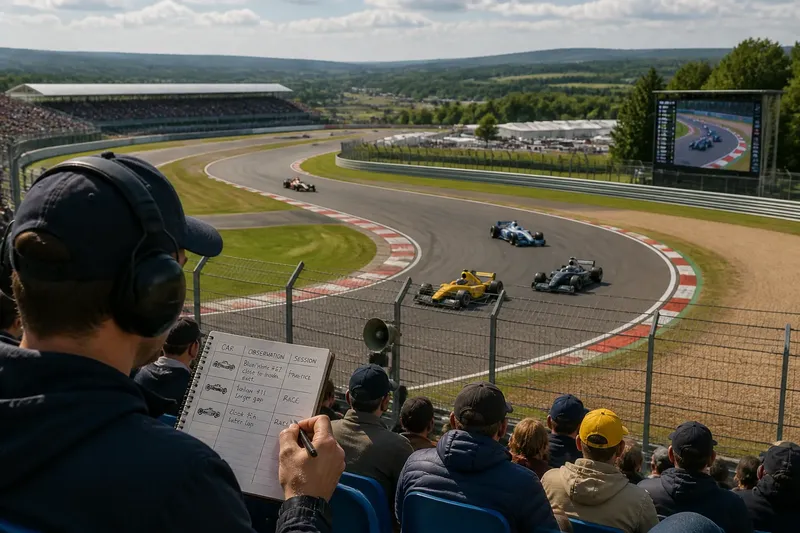
A first race weekend viewing plan works best when you choose one clear vantage point and follow the same stretch of circuit through the day. A corner with a visible approach and exit can turn separate sessions into a comparison you can follow, even if you do not know every driver or rule.
Prepare around the event timetable, the sightlines you can actually reach and a small number of cars to recognize. The aim is not to account for every incident; it is to understand what your chosen view can show as the weekend develops.
What should you plan before leaving?
Check the official timetable for spectator access, session times and any event-specific arrangements. Weekends differ: a schedule may include practice and qualifying before the race, while other formats arrange sessions differently or add support races.
Choose a main viewing point where you can watch more than a brief flash of each car. A grandstand may frame a particular corner; a general-admission bank may offer more choice, subject to venue access rules. Pick a nearby backup in case your first spot is crowded or obstructed.
Use the circuit map to locate entrances, walking routes, screens, toilets and food areas. Pack ear protection, weather-appropriate clothing, and a phone or small notebook. Keep the plan modest: follow a few cars or watch one corner, rather than trying to track everything at once.
How do you make the schedule useful?
Arrive early enough to find your spot before the session you want to watch. Check the timetable and venue notices again on arrival, since access or session arrangements may change. If a screen is visible from your location, note where it is and what information it carries.
Before the cars appear, look at the corner’s shape and your sightlines. Identify where cars first come into view, where they change direction and where they disappear. That simple map of your view helps you distinguish what you can observe from what happens elsewhere.
Use the sessions as separate chances to watch the same place:
- Practice: Learn the traffic flow and choose a few cars or one corner to follow.
- Qualifying: Watch how the same section looks when drivers are pursuing a grid position.
- Race: Follow cars arriving together, changes in spacing and any action visible at your chosen point.
If the event uses a different format, apply the same approach to the sessions on its timetable: identify each session’s purpose, then return to your chosen view.
What can practice help you notice?
Practice is a good time to learn the circuit’s rhythm from your spot. Cars may arrive in clusters, run separately or return after a pause, so the view can shift between steady traffic and quiet intervals. Watch how they approach, turn through and leave the corner.
Pick a few cars you can recognize by number, color or distinctive markings. Notice whether a car follows a similar path on later passes, or whether its line visibly changes. These are descriptions of what happened at your corner, not explanations of why.
For concise notes, use three headings: “car,” “observation” and “session.” Write “blue-and-white car ran wide at the exit” rather than assigning a cause. A screen or commentary can add context, but keep that separate from what you saw.
Say you arrive at a corner where a barrier hides the entry but leaves the exit in view. During practice, you recognize a blue-and-white car by its number and note that it appears close to the inside curb on two passes; you then check the screen to match the number to the car. The resulting record is that car’s visible exit position, while its unseen approach remains unknown.
What changes when you watch qualifying?
Qualifying often feels more focused than practice because drivers are working toward a grid position. The session structure varies by series, so use the event information to understand what is happening rather than assuming a familiar format.
At your corner, watch the gaps between cars as well as their lines. A clear stretch may make one car easier to follow; a car catching another gives you visible traffic, but does not by itself explain the effect on a lap.
After a pass, note the car you recognized, what part of the corner you could see and whether the view was clear. If the approach is hidden, leave braking out of the observation. Check a screen or official timing afterward if available, while remembering that one corner cannot account for a whole lap.
What should you follow during the race?
Before the start, decide whether your spot shows the grid or only the cars later in the lap. If it does not show the start, you can stay and follow the field as it reaches your section, or move to another approved area if the route and schedule allow.
During the race, track a few recognizable cars. Notice which arrive together, which leave a gap and whether that pattern changes on later passes. A screen or timing display can supply position context when a pass happens outside your view.
Trackside flags and signals have specific meanings, and the display at one post may not tell you the status of the whole circuit. Follow official announcements and event guidance if a signal is unclear or only partly visible.
Imagine you are watching a yellow car and a dark car approach the same corner. You see the yellow car leave a larger gap on one pass, then arrive closer on a later pass; you check the timing screen for position context and record the spacing change. That answers what you could see, but not whether a mechanical issue or team instruction caused it.
What questions do first-time spectators ask?
Should I stay in one place all day?
A consistent spot makes it easier to compare sessions, while another approved area may show a different part of the circuit. Keep a main location and move only when the timetable, route and access rules make it practical.
How many cars should I follow?
Choose a small group you can recognize by number or livery. If you lose track of one, return to the cars you still recognize rather than trying to identify the whole field.
What if I cannot see a timing screen?
Use any official event app, commentary or announcements available to you. Without live timing, you can still follow visible action at your corner, but leave overall positions unconfirmed.
Do I need to know every flag before the race?
Learn the spectator guidance provided by the event and listen for official announcements. If a signal’s meaning is unclear from your location, consult circuit information rather than guessing.
How can you compare what you see?
After each session, write one direct observation and one question. For example, note that a recognizable car used a wider exit line in qualifying than in practice, then ask whether the difference appears on another pass. Comparing the same corner and car can make the change easier to notice, though traffic and session conditions may differ.
Keep notes short: the car, the visible action and the session are often enough. Mark limits plainly, such as “entry hidden by barrier,” so a missing view does not turn into an invented detail.
Before moving on, check the next session time and decide whether to stay or use your backup spot. Allow for walking time, refreshments and access restrictions; move only if the new location offers a view you want to follow.
Keep the circuit map and your notes for another visit. A first race weekend viewing plan becomes more useful when it records which sightlines worked, where screens helped and what remains out of view, giving you a more specific place to begin next time.