How to Judge the Real Cost of a Pit Stop
Learn how to judge the real cost of a pit stop by separating crew service from pit-lane travel, strategy timing, and the position after rejoining.
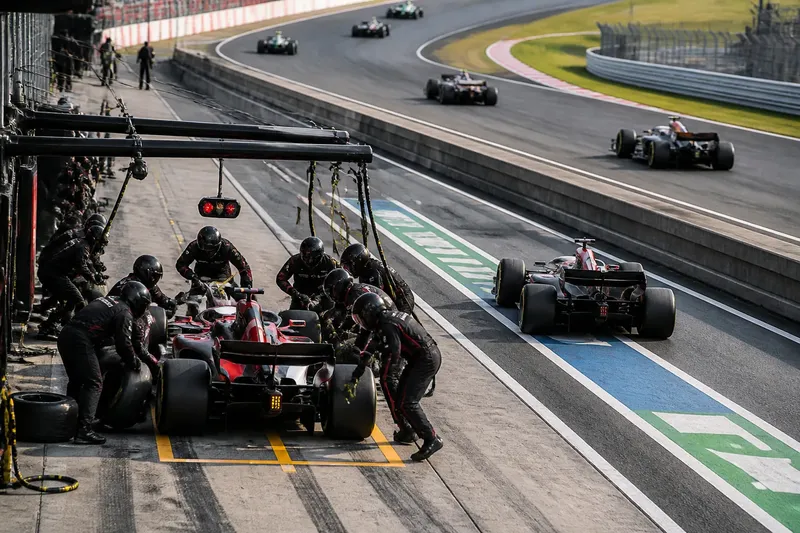
A short pit stop does not always produce a quick return to the same place in the race. To judge the real cost of a pit stop, separate the crew’s stationary service from the lane journey and the position the driver reaches after rejoining.
What does a pit-stop time include?
A broadcast may show the interval when the car is stationary at its team’s box. That clock helps describe the service itself, such as a tyre change, but it does not necessarily cover the full time spent away from racing speed.
The driver also slows to enter the pit lane, travels through it under the applicable rules, and accelerates back onto the circuit. Those parts vary with the circuit layout and event regulations, so a tidy service can still coincide with a difficult return to the race.
Before comparing two stops, check what the displayed timing starts and ends with.
How can a clean stop still lose track position?
The order can change while a car is in the lane. A rival may pass the pit exit, or the returning driver may find traffic ahead that was not directly involved in the service.
That traffic can limit what the driver does with the tyres and pace available after the stop. The useful question is not only whether a place was lost, but whether the driver can pass the cars ahead and resume the intended race pace.
On a circuit where passing is difficult, rejoining behind a rival may shape the next phase of the race more than a small difference in service time.
How does the chosen lap affect the outcome?
A team chooses a stop timing by weighing tyre condition, the expected pace after the stop, pit-lane cost, and likely traffic on return. Stopping earlier may offer the driver fresher tyres while a rival remains out; staying out may preserve track position or provide clear track for a while longer.
Neither choice is automatically better. An early stop can leave a car trapped behind traffic, while a later one can mean continuing on tyres that no longer suit the team’s plan. The timing is useful to judge through what it asks the driver to do next, rather than through the stop alone.
What do undercut and overcut mean?
An undercut is a plan to stop before a rival and use the laps on fresher tyres to gain ground before that rival stops. It depends on the first car having room to make progress and on the rival not building enough advantage while staying out.
An overcut is a plan to remain on track while a rival stops, then stop later. It can suit a driver who has clear track or can maintain useful pace on the current tyres, but traffic after the later stop can erase the benefit.
These terms name strategic attempts, not certain outcomes. Look at where both cars rejoin and how their next laps unfold.
What should you watch around a pit stop?
Follow the relevant cars before and after the stop, and use the timing display to keep their sequence clear. Each observation points to a different question about the stop’s effect:
- Check whether the broadcast clock shows stationary service or a broader interval; if it covers only service, treat it as a crew-time comparison, and if it covers more, check what additional portion it includes.
- Check which rivals have already stopped; if their strategies are comparable, compare their positions after the stops, and if they are not, wait for the remaining stops before judging the order.
- Check the returning driver’s place and the cars ahead; if the lane exit leaves clear track, watch the driver’s pace, and if traffic blocks the way, account for that before attributing the lost time to service.
- Check whether the driver can pass the cars ahead; if the driver clears them, compare the later gaps, and if not, consider how that traffic limits the usefulness of the fresh tyres.
- Check the gaps before and after the relevant rivals stop; if the gap changes once both strategies are complete, assess the combined timing and rejoin, and if one car is still waiting to stop, treat the order as provisional.
- Check whether the team stopped in response to a rival or tyre condition; if the timing matches a clear strategic choice, assess whether the intended pace followed, and if the reason is unclear, avoid assigning a motive from the broadcast alone.
Imagine, hypothetically, that two cars are separated by a small gap and the leading car stops first. It rejoins behind a rival, then passes that car before the rival makes its own stop; by comparing the order and gaps after both stops, a viewer can see whether the early timing preserved the lead or left the cars reversed. The example depends on invented circumstances, but the method is to track the same rivals through the full sequence.
What do viewers ask about the real cost of a pit stop?
Does a faster service mean a better stop?
It means the stationary service took less time, if that is the interval being shown. To judge the race effect, also look at the lane journey and where the driver rejoins.
Why might a team keep a car on track?
The team may be trying to use clear track or preserve the current position while a rival stops. The choice also depends on tyre condition and the likely traffic after a later stop.
Why is a car’s position after stopping sometimes temporary?
Rivals may still be on track and have not completed their own stops. Compare the order again once the cars in the same strategic contest have returned to the circuit.
Can a driver lose ground despite a smooth service?
Yes. The lane journey, timing, and traffic on rejoining can all affect the result visible on the timing screen, even when the service itself appears smooth.
When can you judge the stop’s effect?
Compare the same cars across the full sequence: their order before the stops, their rejoining positions, and their gaps once the relevant rivals have also stopped. This keeps a temporary order change from being mistaken for a settled result.
For the real cost of a pit stop, the most useful evidence is the sequence the timing screen and broadcast let you follow: who stopped, who remained out, where each car rejoined, and whether it could make progress afterward. A crew’s service is one visible part of that sequence, not a verdict on its own.